Learning Hub

Strengthening Individual and Organisational Capacity to Use Evidence for Impact

At the crux of it, Learning Hub at CERP focuses on building the long arc of human capital development in Pakistan: a key contributor to economic growth in the long-term. The core philosophy of all Learning programmes is the centrality of data and research for informed decision making.

Our Scope

We have a national and global presence, academic experts and practitioners, best-in-class customised modules and teaching methods and an extensive partner network.

Participating Organisations
0 +
Individuals
Trained
0 +
Individuals Trained
0 +

Government

Private Sector

Development Sector

Not-For-Profit Organisations

Academia

Multi-Lateral Donor Organisations

Portfolio

Government

Private Sector

Development Sector

Not-For-Profit Organisations

Academia

Multi-Lateral Donor Organisations

CERP–AidData Credit Shopper Tool Training

CERP–AidData Credit Shopper Tool Training

CERP–AidData Credit Shopper Tool Training is a selective three-day capacity building program taking place from 14–16 January, 2026 in Islamabad, Pakistan. It is designed exclusively for senior fiscal debt managers, policy officials, and change-makers, equipping them with tools to support sustainable borrowing decisions. The registration deadline for this training is 15 December, 2025.

Evaluative Evidence for Gender Policy: edition II

Evaluative Evidence for Gender Policy: edition II

Evaluative Evidence for Gender Policy: edition II is a two-day capacity-building workshop designed to build capacity in gender-sensitive Monitoring and Evaluation (M&E). This program is part of a three-part series organized by the CERP in collaboration with CLEAR Pakistan & Central Asia. The second edition will take place from 17-18 June, 2025, in Lahore, Pakistan.

Masterclass for Data Analytics: Stata

Masterclass for Data Analytics: Stata

We are excited to launch the first course in our Masterclass in Data Analytics series: the CERP Masterclass in Data Analytics using Stata, a three-day intensive online training designed to elevate participants’ proficiency in data analytics. Scheduled to take place from May 9-11, 2025, this workshop will equip professionals and researchers with the skills to conduct robust data analysis and enhance decision-making processes using Stata.

Navigating the Energy Transition for a Sustainable Future in Pakistan: Edition III

Navigating the Energy Transition for a Sustainable Future in Pakistan: Edition III

Navigating the energy transition for a sustainable future in Pakistan: edition III is a two-day capacity-building workshop designed to address Pakistan’s critical energy challenges. This program is part of a three-part series organized by the Centre for Economic Research in Pakistan (CERP) in collaboration with Princeton University. The third and final edition will take place from 29-30 May, 2025, in Islamabad, Pakistan.

Innovative Evaluation Frameworks for M&E

Innovative Evaluation Frameworks for M&E

Innovative Evaluation Frameworks for M&E is a three-day capacity building initiative designed for M&E professionals across the public, private, and development sectors who are eager to drive greater impact through social development projects. At the heart of it lies this question: how can we ensure that social development initiatives in Pakistan achieve maximum impact? Collaboration partners for the course are CLEAR Pakistan & Central Asia & Global Evaluation Initiative (GEI).

Evidence-Based Program Design (EBPD)

Evidence-Based Program Design (EBPD)

EBPD is a four-day course, offered annually, that aims to equip participants with the technical tools to apply a structured and highly practical approach to programme design and implementation, incorporating economic theory and evidence at every stage. It aims to help determine mechanisms that can help ensure that development policies and programmes in Pakistan achieve maximum impact. 

Leading Thinking Firms (LTF) 

Leading Thinking Firms (LTF) 

LTF caters to the private sector and is designed for C-level executives and strategic management across various verticals of (including but not limited to): marketing and business development, consumer insights, product development, and finance. LTF is an intensive day-long boot camp-style course that builds participants’ ability to leverage data to make strategic decisions,

Policy Skills & Leadership (PS&L) 

Policy Skills & Leadership (PS&L) 

CERP’s Policy Skills & Leadership is a three-day intensive workshop that focuses on two fundamental topics: Exercising Leadership and Policy Skills. PS&L is designed for a broad range of mid-senior level professionals from the public and development sectors (i.e. NGOs, INGOs, non-profits) and multi-lateral institutions, including: policymakers, practitioners as well as policy-focused academics and analysts.

Monitoring & Evaluation (M&E) Boot Camp 

Monitoring & Evaluation (M&E) Boot Camp 

Taught by leading M&E specialists and global experts, the M&E Boot Camp is an open-enrolment series of three courses:

  1. Monitoring & Evaluation
  2. Qualitative and Quantitative Research Methodologies
  3. Project Management

Building Capacity to Use Research Evidence (BCURE)  

Building Capacity to Use Research Evidence (BCURE)  

BCURE is a series of trainings that aim to increase technical skills and motivation for the use of data and evidence. It has been implemented in collaboration with the National School of Public Policy in Pakistan, Civil Services Academy and Evidence for Policy Design (EPoD) at Harvard University. The course is designed for policymakers, public agencies and the broader systems of governance. 

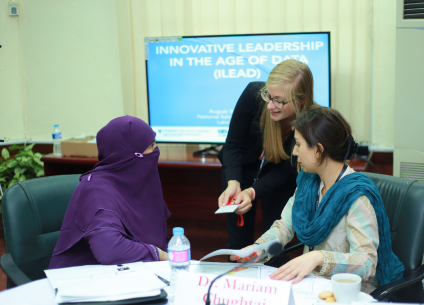
Innovative Leadership in the Age of Data (ILEAD) 

Innovative Leadership in the Age of Data (ILEAD) 

Leaders today have to survive and thrive in a world which is characterised by unprecedented growth in data and information. This creates the inevitable challenge to create data-savvy organisations.
ILEAD is a three-day course that employs cutting-edge pedagogy and experiential learning in groups to give the participants a vision to transform their organisations.

Activate

Activate

Activate is a first-of-its-kind, highly selective summer programme in Lahore, Pakistan, that aims to equip the youth interested in the development sector with experiential learning and on-ground field experience in Pakistan, tailored technical and professional development skills, and networking opportunities.

Customised Offerings

public & development sectors

We aim to build and enhance participant skill set to use evidence effectively for research, decision-making and informed policies. We couple practical knowledge with an action-oriented approach, to help participants catalyse career growth in their relevant fields and build a strong culture of evidence within their organisations. Our expertise includes but is not limited to Data driven impact evaluation, results-based monitoring, rigorous capacity building on how to employ both quantitative and qualitative research methodologies, and adaptive project management and foundational negotiations skills.

corporate & private sectors

We aim to serve as an active change agent to help bolster participants’ skillsets pertinent to entrepreneurial leadership and mindset, innovation management, growth, and scale, with learnings to help drive future growth in their businesses. Our expertise includes but is not limited to Leadership development and informed decision making through data & innovation.

Calendar

CERP–AidData Credit Shopper Tool Training

Activate, at CERP: Pre-College Summer Program, Applications Opening Soon

Evaluative Evidence for Gender Policy: edition II

Navigating the Energy Transition for a Sustainable Future in Pakistan: Edition III

Masterclass for Data Analytics: Stata

Innovative Evaluation Frameworks for M&E

Navigating the Energy Transition for a Sustainable Future in Pakistan: Edition II

Evidence Based Program Design (EBPD)

Monitoring & Evaluation Boot Camp (M&E)

The Art of Negotiation Skills (Customised) - EO Lahore:

Building Capacity to Use Research Evidence (BCURE)

M&E Boot Camp for Practitioners (Customised) - Planning Commission

Policy Skills and Leadership (PS&L)

Leading Thinking Firms (LTF)

Innovative Leadership in the Age of Data (ILEAD)

Payment Options

  1. Make an online/wire transfer to the following account: Bank Name: Standard Chartered Bank (Pakistan) Limited Account Title: Centre for Economic Research in Pakistan Account Number: 08-7010606-01 IBAN: PK10 SCBL 0000 0087 0106 0601
  2. Send over your cheque against CERP’s bank account to the following address: Learning Hub Centre for Economic Research in Pakistan 29-P Gulberg II, Lahore 54660, Pakistan [email protected] +92 (0) 42 3577 7844

Refund and Exchange Policy

  1. No Refunds:
  • Once a registration is confirmed and payment is processed, all fees are non-refundable. This includes circumstances such as withdrawal, cancellation, or no-show.
    • Exceptions to this policy are not permitted. We encourage participants to ensure their availability before registering for a course.
  1. No Exchanges:
  • We do not allow exchanges for course registrations. Once registered, participants are not permitted to transfer their enrollment to another course or session.
  1. Participant Transfer:
  • Participants may transfer their registration to another individual, provided we receive notification of the name and title change, along with the new participant’s information, at least three days prior to the course start date.
Note: This policy is subject to change at any time. Participants will be notified of any updates prior to enrollment. For any questions or concerns regarding this policy, please contact us at [email protected].

testimonials

Naveed Aziz DFID/UKAID

Monis Rahman YPO

Rafique Mustafa Shaikh

“I was one of the participants for the M&E course that CERP offered during the month of April. My primary motivation for joining the course was that I was always interested in learning more about the development sector and potentially working over there. I was especially interested in learning how projects are managed and what projects are relevant within the context of Pakistan. This course did not only do a brilliant job at exposing me to the kinds of projects that are going on but also the framework that is followed by the development sector, the skills that you need to develop in order to run a project efficiently and I think one of the theories that I will not only be carrying with me in the corporate sector right now but also eventually when I join the development sector will be the Theory of Change. I think this framework is just so helpful, regardless of what context you apply it in and other than that I was really grateful for the networking opportunities, the fact that I was able to meet like-minded people who were interested in the development sector or were already working there. I learned a lot not just from the teachers but from my peers as well and I hope to continue to stay in touch and continue to use the skills that I learned in my day to day life right now and also stay in touch with the connections I made during this class.”

Qandeel Tariq

Research Scientist, Amazon.com
“I was one of the participants for the M&E course that CERP offered during the month of April. My primary motivation for joining the course was that I was always interested in learning more about the development sector and potentially working over there. I was especially interested in learning how projects are managed and what projects are relevant within the context of Pakistan. This course did not only do a brilliant job at exposing me to the kinds of projects that are going on but also the framework that is followed by the development sector, the skills that you need to develop in order to run a project efficiently and I think one of the theories that I will not only be carrying with me in the corporate sector right now but also eventually when I join the development sector will be the Theory of Change. I think this framework is just so helpful, regardless of what context you apply it in and other than that I was really grateful for the networking opportunities, the fact that I was able to meet like-minded people who were interested in the development sector or were already working there. I learned a lot not just from the teachers but from my peers as well and I hope to continue to stay in touch and continue to use the skills that I learned in my day to day life right now and also stay in touch with the connections I made during this class.”

Qandeel Tariq

Research Scientist, Amazon.com
“This workshop was really good because I think this is the first time researchers are sharing their techniques for making decisions with the private sector. Usually, researchers operate in their own silos and the corporate sector in their own silos, but there are skills that are in both silos, and the two sides can learn from each other. The research sector can learn how large scale companies can use data and the corporate sector can learn how data can be made sense of. And in that sense, this workshop was really good, because it bridged the gap between the two.”

Mariam Chughtai

Director, Chughtai Lab
“This workshop was really good because I think this is the first time researchers are sharing their techniques for making decisions with the private sector. Usually, researchers operate in their own silos and the corporate sector in their own silos, but there are skills that are in both silos, and the two sides can learn from each other. The research sector can learn how large scale companies can use data and the corporate sector can learn how data can be made sense of. And in that sense, this workshop was really good, because it bridged the gap between the two.”

Mariam Chughtai

Director, Chughtai Lab
“I think it was a very useful session today and the value and usefulness of data, how it can be employed in industries locally and the insight into how it is being used globally in Fortune 500 companies was very insightful and it has been a great learning experience, I leave this conference with new ideas and thoughts about opportunities that one should focus on.”

Junaid Kalim

CEO, Kalim Associates
“I think it was a very useful session today and the value and usefulness of data, how it can be employed in industries locally and the insight into how it is being used globally in Fortune 500 companies was very insightful and it has been a great learning experience, I leave this conference with new ideas and thoughts about opportunities that one should focus on.”

Junaid Kalim

CEO, Kalim Associates

News & events

News

CERP, in collaboration with Princeton, hosts “Navigating the Energy Transition for a Sustainable Future in Pakistan: Edition III” Workshop

October 30, 2025
CERP and Princeton University co-hosted a two-day workshop, “Navigating the Energy Transition for a Sustainable Future in Pakistan: Edition III,” to address the nation’s urgent energy demands and pave the way for a low-carbon future through technical lectures, interactive group work, and high-level policy dialogues.
Read More

CERP, in collaboration with Princeton, hosts “Navigating the Energy Transition for a Sustainable Future in Pakistan: Edition III” Workshop

CERP, in collaboration with the Julis-Rabinowitz Center for Public Policy & Finance (JRCPPF) at the Princeton School of Public and International Affairs and Princeton’s Andlinger Center for Energy and the Environment (ACEE), hosted the third edition of the workshop “Navigating the Energy Transition for a Sustainable Future in Pakistan.” The workshop aimed to address the central question of how Pakistan can meet its urgent energy demands while paving the way for a low-carbon future.

Held on 29–30 May 2025 in Islamabad, this edition brought together 35 participants from across Pakistan’s energy ecosystem, including policymakers, regulators, researchers, and public- and private-sector actors. The program combined technical lectures, interactive group work, and high-level policy dialogues, creating a unique learning environment that combined analytical depth with practical, hands-on engagement. Sessions explored demand forecasting, long-run scenario planning, clean energy systems, industrial decarbonisation, policy design for energy transition, and financing mechanisms. A major milestone was the launch of the Pakistan Energy Transition Roadmap (PETR) Project.

The workshop also featured two policy dialogues: “Mobilising Capital for Energy Finance” and “Pakistan’s Energy Transition Policy Planning.” These discussions underscored that inclusive stakeholder engagement, credible data, and iterative, locally grounded policymaking are essential to accelerate Pakistan’s transition. Participants gained actionable insights into forecasting tools, financing opportunities, and practical frameworks for policymaking under uncertainty.

CERP, in collaboration with Princeton, hosts “Navigating the Energy Transition for a Sustainable Future in Pakistan: Edition III” Workshop

CERP, in collaboration with the Julis-Rabinowitz Center for Public Policy & Finance (JRCPPF) at the Princeton School of Public and International Affairs and Princeton’s Andlinger Center for Energy and the Environment (ACEE), hosted the third edition of the workshop “Navigating the Energy Transition for a Sustainable Future in Pakistan.” The workshop aimed to address the central question of how Pakistan can meet its urgent energy demands while paving the way for a low-carbon future.

Held on 29–30 May 2025 in Islamabad, this edition brought together 35 participants from across Pakistan’s energy ecosystem, including policymakers, regulators, researchers, and public- and private-sector actors. The program combined technical lectures, interactive group work, and high-level policy dialogues, creating a unique learning environment that combined analytical depth with practical, hands-on engagement. Sessions explored demand forecasting, long-run scenario planning, clean energy systems, industrial decarbonisation, policy design for energy transition, and financing mechanisms. A major milestone was the launch of the Pakistan Energy Transition Roadmap (PETR) Project.

The workshop also featured two policy dialogues: “Mobilising Capital for Energy Finance” and “Pakistan’s Energy Transition Policy Planning.” These discussions underscored that inclusive stakeholder engagement, credible data, and iterative, locally grounded policymaking are essential to accelerate Pakistan’s transition. Participants gained actionable insights into forecasting tools, financing opportunities, and practical frameworks for policymaking under uncertainty.

News

CERP, in collaboration with Princeton, hosts “Navigating the Energy Transition for a Sustainable Future in Pakistan: Edition III” Workshop

October 30, 2025
Read More

CERP, in collaboration with Princeton, hosts “Navigating the Energy Transition for a Sustainable Future in Pakistan: Edition III” Workshop

CERP, in collaboration with the Julis-Rabinowitz Center for Public Policy & Finance (JRCPPF) at the Princeton School of Public and International Affairs and Princeton’s Andlinger Center for Energy and the Environment (ACEE), hosted the third edition of the workshop “Navigating the Energy Transition for a Sustainable Future in Pakistan.” The workshop aimed to address the central question of how Pakistan can meet its urgent energy demands while paving the way for a low-carbon future.

Held on 29–30 May 2025 in Islamabad, this edition brought together 35 participants from across Pakistan’s energy ecosystem, including policymakers, regulators, researchers, and public- and private-sector actors. The program combined technical lectures, interactive group work, and high-level policy dialogues, creating a unique learning environment that combined analytical depth with practical, hands-on engagement. Sessions explored demand forecasting, long-run scenario planning, clean energy systems, industrial decarbonisation, policy design for energy transition, and financing mechanisms. A major milestone was the launch of the Pakistan Energy Transition Roadmap (PETR) Project.

The workshop also featured two policy dialogues: “Mobilising Capital for Energy Finance” and “Pakistan’s Energy Transition Policy Planning.” These discussions underscored that inclusive stakeholder engagement, credible data, and iterative, locally grounded policymaking are essential to accelerate Pakistan’s transition. Participants gained actionable insights into forecasting tools, financing opportunities, and practical frameworks for policymaking under uncertainty.

CERP, in collaboration with Princeton, hosts “Navigating the Energy Transition for a Sustainable Future in Pakistan: Edition III” Workshop

CERP, in collaboration with the Julis-Rabinowitz Center for Public Policy & Finance (JRCPPF) at the Princeton School of Public and International Affairs and Princeton’s Andlinger Center for Energy and the Environment (ACEE), hosted the third edition of the workshop “Navigating the Energy Transition for a Sustainable Future in Pakistan.” The workshop aimed to address the central question of how Pakistan can meet its urgent energy demands while paving the way for a low-carbon future.

Held on 29–30 May 2025 in Islamabad, this edition brought together 35 participants from across Pakistan’s energy ecosystem, including policymakers, regulators, researchers, and public- and private-sector actors. The program combined technical lectures, interactive group work, and high-level policy dialogues, creating a unique learning environment that combined analytical depth with practical, hands-on engagement. Sessions explored demand forecasting, long-run scenario planning, clean energy systems, industrial decarbonisation, policy design for energy transition, and financing mechanisms. A major milestone was the launch of the Pakistan Energy Transition Roadmap (PETR) Project.

The workshop also featured two policy dialogues: “Mobilising Capital for Energy Finance” and “Pakistan’s Energy Transition Policy Planning.” These discussions underscored that inclusive stakeholder engagement, credible data, and iterative, locally grounded policymaking are essential to accelerate Pakistan’s transition. Participants gained actionable insights into forecasting tools, financing opportunities, and practical frameworks for policymaking under uncertainty.

News

CERP, in collaboration with Princeton, hosts “Navigating the Energy Transition for a Sustainable Future in Pakistan: Edition III” Workshop

October 30, 2025
Read More

CERP, in collaboration with Princeton, hosts “Navigating the Energy Transition for a Sustainable Future in Pakistan: Edition III” Workshop

CERP, in collaboration with the Julis-Rabinowitz Center for Public Policy & Finance (JRCPPF) at the Princeton School of Public and International Affairs and Princeton’s Andlinger Center for Energy and the Environment (ACEE), hosted the third edition of the workshop “Navigating the Energy Transition for a Sustainable Future in Pakistan.” The workshop aimed to address the central question of how Pakistan can meet its urgent energy demands while paving the way for a low-carbon future.

Held on 29–30 May 2025 in Islamabad, this edition brought together 35 participants from across Pakistan’s energy ecosystem, including policymakers, regulators, researchers, and public- and private-sector actors. The program combined technical lectures, interactive group work, and high-level policy dialogues, creating a unique learning environment that combined analytical depth with practical, hands-on engagement. Sessions explored demand forecasting, long-run scenario planning, clean energy systems, industrial decarbonisation, policy design for energy transition, and financing mechanisms. A major milestone was the launch of the Pakistan Energy Transition Roadmap (PETR) Project.

The workshop also featured two policy dialogues: “Mobilising Capital for Energy Finance” and “Pakistan’s Energy Transition Policy Planning.” These discussions underscored that inclusive stakeholder engagement, credible data, and iterative, locally grounded policymaking are essential to accelerate Pakistan’s transition. Participants gained actionable insights into forecasting tools, financing opportunities, and practical frameworks for policymaking under uncertainty.

CERP, in collaboration with Princeton, hosts “Navigating the Energy Transition for a Sustainable Future in Pakistan: Edition III” Workshop

CERP, in collaboration with the Julis-Rabinowitz Center for Public Policy & Finance (JRCPPF) at the Princeton School of Public and International Affairs and Princeton’s Andlinger Center for Energy and the Environment (ACEE), hosted the third edition of the workshop “Navigating the Energy Transition for a Sustainable Future in Pakistan.” The workshop aimed to address the central question of how Pakistan can meet its urgent energy demands while paving the way for a low-carbon future.

Held on 29–30 May 2025 in Islamabad, this edition brought together 35 participants from across Pakistan’s energy ecosystem, including policymakers, regulators, researchers, and public- and private-sector actors. The program combined technical lectures, interactive group work, and high-level policy dialogues, creating a unique learning environment that combined analytical depth with practical, hands-on engagement. Sessions explored demand forecasting, long-run scenario planning, clean energy systems, industrial decarbonisation, policy design for energy transition, and financing mechanisms. A major milestone was the launch of the Pakistan Energy Transition Roadmap (PETR) Project.

The workshop also featured two policy dialogues: “Mobilising Capital for Energy Finance” and “Pakistan’s Energy Transition Policy Planning.” These discussions underscored that inclusive stakeholder engagement, credible data, and iterative, locally grounded policymaking are essential to accelerate Pakistan’s transition. Participants gained actionable insights into forecasting tools, financing opportunities, and practical frameworks for policymaking under uncertainty.

News

CERP Launches the Femtech Innovation Hub to Transform Women’s Healthcare in Pakistan

February 27, 2025
CERP has launched the Femtech Innovation Hub for Pakistan (FIHP) at LUMS, marking a major step towards improving women’s healthcare through technology and women-led innovation. The initiative is funded by the Gates Foundation.
Read More

CERP Launches the Femtech Innovation Hub to Transform Women’s Healthcare in Pakistan

The launch event marked a significant milestone for Pakistan’s innovation ecosystem, bringing together policymakers, health experts, and entrepreneurs for a panel discussion titled “Tech for Her: Innovating to Transform Women’s Health.”

Moderated by Salwa Akhtar, Programme Manager at FIHP, the panel featured experienced speakers including Ambreen Iftikhar (Board of Investment), Asma Omer (Founder, Marham), Dr Shaper Mirza (Associate Professor, LUMS), Dr Basmaa Ali (Founder, Zanjabee Integrative Medicine), and Sabah Zubair (Founder, Her Machine). The discussion explored the future of FemTech and its potential to revolutionise healthcare access for women.

Speaking at the event, Imran Zia, Executive Vice President at CERP, emphasised the urgency of investing in data-driven, scalable solutions:

“Pakistan’s healthcare system leaves millions of women without access to essential services. Through FIHP, we are leveraging technology, research, and strategic partnerships to close this gap. By supporting FemTech start-ups, we aim to create sustainable businesses that improve health outcomes for women and drive systemic reform.”

Pakistan currently faces a severe shortage of women-focused health solutions, with over 45 million women lacking access to basic healthcare services. Despite a growing start-up ecosystem, fewer than ten FemTech companies operate in the country. FIHP aims to bridge this gap by equipping start-ups with the resources, expertise, and global networks needed to scale their impact.

View More

CERP Launches the Femtech Innovation Hub to Transform Women’s Healthcare in Pakistan

The launch event marked a significant milestone for Pakistan’s innovation ecosystem, bringing together policymakers, health experts, and entrepreneurs for a panel discussion titled “Tech for Her: Innovating to Transform Women’s Health.”

Moderated by Salwa Akhtar, Programme Manager at FIHP, the panel featured experienced speakers including Ambreen Iftikhar (Board of Investment), Asma Omer (Founder, Marham), Dr Shaper Mirza (Associate Professor, LUMS), Dr Basmaa Ali (Founder, Zanjabee Integrative Medicine), and Sabah Zubair (Founder, Her Machine). The discussion explored the future of FemTech and its potential to revolutionise healthcare access for women.

Speaking at the event, Imran Zia, Executive Vice President at CERP, emphasised the urgency of investing in data-driven, scalable solutions:

“Pakistan’s healthcare system leaves millions of women without access to essential services. Through FIHP, we are leveraging technology, research, and strategic partnerships to close this gap. By supporting FemTech start-ups, we aim to create sustainable businesses that improve health outcomes for women and drive systemic reform.”

Pakistan currently faces a severe shortage of women-focused health solutions, with over 45 million women lacking access to basic healthcare services. Despite a growing start-up ecosystem, fewer than ten FemTech companies operate in the country. FIHP aims to bridge this gap by equipping start-ups with the resources, expertise, and global networks needed to scale their impact.

View More

News

CERP Launches the Femtech Innovation Hub to Transform Women’s Healthcare in Pakistan

February 27, 2025
Read More

CERP Launches the Femtech Innovation Hub to Transform Women’s Healthcare in Pakistan

The launch event marked a significant milestone for Pakistan’s innovation ecosystem, bringing together policymakers, health experts, and entrepreneurs for a panel discussion titled “Tech for Her: Innovating to Transform Women’s Health.”

Moderated by Salwa Akhtar, Programme Manager at FIHP, the panel featured experienced speakers including Ambreen Iftikhar (Board of Investment), Asma Omer (Founder, Marham), Dr Shaper Mirza (Associate Professor, LUMS), Dr Basmaa Ali (Founder, Zanjabee Integrative Medicine), and Sabah Zubair (Founder, Her Machine). The discussion explored the future of FemTech and its potential to revolutionise healthcare access for women.

Speaking at the event, Imran Zia, Executive Vice President at CERP, emphasised the urgency of investing in data-driven, scalable solutions:

“Pakistan’s healthcare system leaves millions of women without access to essential services. Through FIHP, we are leveraging technology, research, and strategic partnerships to close this gap. By supporting FemTech start-ups, we aim to create sustainable businesses that improve health outcomes for women and drive systemic reform.”

Pakistan currently faces a severe shortage of women-focused health solutions, with over 45 million women lacking access to basic healthcare services. Despite a growing start-up ecosystem, fewer than ten FemTech companies operate in the country. FIHP aims to bridge this gap by equipping start-ups with the resources, expertise, and global networks needed to scale their impact.

View More

CERP Launches the Femtech Innovation Hub to Transform Women’s Healthcare in Pakistan

The launch event marked a significant milestone for Pakistan’s innovation ecosystem, bringing together policymakers, health experts, and entrepreneurs for a panel discussion titled “Tech for Her: Innovating to Transform Women’s Health.”

Moderated by Salwa Akhtar, Programme Manager at FIHP, the panel featured experienced speakers including Ambreen Iftikhar (Board of Investment), Asma Omer (Founder, Marham), Dr Shaper Mirza (Associate Professor, LUMS), Dr Basmaa Ali (Founder, Zanjabee Integrative Medicine), and Sabah Zubair (Founder, Her Machine). The discussion explored the future of FemTech and its potential to revolutionise healthcare access for women.

Speaking at the event, Imran Zia, Executive Vice President at CERP, emphasised the urgency of investing in data-driven, scalable solutions:

“Pakistan’s healthcare system leaves millions of women without access to essential services. Through FIHP, we are leveraging technology, research, and strategic partnerships to close this gap. By supporting FemTech start-ups, we aim to create sustainable businesses that improve health outcomes for women and drive systemic reform.”

Pakistan currently faces a severe shortage of women-focused health solutions, with over 45 million women lacking access to basic healthcare services. Despite a growing start-up ecosystem, fewer than ten FemTech companies operate in the country. FIHP aims to bridge this gap by equipping start-ups with the resources, expertise, and global networks needed to scale their impact.

View More

News

CERP Launches the Femtech Innovation Hub to Transform Women’s Healthcare in Pakistan

February 27, 2025
Read More

CERP Launches the Femtech Innovation Hub to Transform Women’s Healthcare in Pakistan

The launch event marked a significant milestone for Pakistan’s innovation ecosystem, bringing together policymakers, health experts, and entrepreneurs for a panel discussion titled “Tech for Her: Innovating to Transform Women’s Health.”

Moderated by Salwa Akhtar, Programme Manager at FIHP, the panel featured experienced speakers including Ambreen Iftikhar (Board of Investment), Asma Omer (Founder, Marham), Dr Shaper Mirza (Associate Professor, LUMS), Dr Basmaa Ali (Founder, Zanjabee Integrative Medicine), and Sabah Zubair (Founder, Her Machine). The discussion explored the future of FemTech and its potential to revolutionise healthcare access for women.

Speaking at the event, Imran Zia, Executive Vice President at CERP, emphasised the urgency of investing in data-driven, scalable solutions:

“Pakistan’s healthcare system leaves millions of women without access to essential services. Through FIHP, we are leveraging technology, research, and strategic partnerships to close this gap. By supporting FemTech start-ups, we aim to create sustainable businesses that improve health outcomes for women and drive systemic reform.”

Pakistan currently faces a severe shortage of women-focused health solutions, with over 45 million women lacking access to basic healthcare services. Despite a growing start-up ecosystem, fewer than ten FemTech companies operate in the country. FIHP aims to bridge this gap by equipping start-ups with the resources, expertise, and global networks needed to scale their impact.

View More

CERP Launches the Femtech Innovation Hub to Transform Women’s Healthcare in Pakistan

The launch event marked a significant milestone for Pakistan’s innovation ecosystem, bringing together policymakers, health experts, and entrepreneurs for a panel discussion titled “Tech for Her: Innovating to Transform Women’s Health.”

Moderated by Salwa Akhtar, Programme Manager at FIHP, the panel featured experienced speakers including Ambreen Iftikhar (Board of Investment), Asma Omer (Founder, Marham), Dr Shaper Mirza (Associate Professor, LUMS), Dr Basmaa Ali (Founder, Zanjabee Integrative Medicine), and Sabah Zubair (Founder, Her Machine). The discussion explored the future of FemTech and its potential to revolutionise healthcare access for women.

Speaking at the event, Imran Zia, Executive Vice President at CERP, emphasised the urgency of investing in data-driven, scalable solutions:

“Pakistan’s healthcare system leaves millions of women without access to essential services. Through FIHP, we are leveraging technology, research, and strategic partnerships to close this gap. By supporting FemTech start-ups, we aim to create sustainable businesses that improve health outcomes for women and drive systemic reform.”

Pakistan currently faces a severe shortage of women-focused health solutions, with over 45 million women lacking access to basic healthcare services. Despite a growing start-up ecosystem, fewer than ten FemTech companies operate in the country. FIHP aims to bridge this gap by equipping start-ups with the resources, expertise, and global networks needed to scale their impact.

View More

News

CERP, in collaboration with Princeton, hosts “Navigating the Energy Transition for a Sustainable Future in Pakistan: Edition III” Workshop

October 30, 2025
CERP and Princeton University co-hosted a two-day workshop, “Navigating the Energy Transition for a Sustainable Future in Pakistan: Edition III,” to address the nation’s urgent energy demands and pave the way for a low-carbon future through technical lectures, interactive group work, and high-level policy dialogues.
Read More

CERP, in collaboration with Princeton, hosts “Navigating the Energy Transition for a Sustainable Future in Pakistan: Edition III” Workshop

CERP, in collaboration with the Julis-Rabinowitz Center for Public Policy & Finance (JRCPPF) at the Princeton School of Public and International Affairs and Princeton’s Andlinger Center for Energy and the Environment (ACEE), hosted the third edition of the workshop “Navigating the Energy Transition for a Sustainable Future in Pakistan.” The workshop aimed to address the central question of how Pakistan can meet its urgent energy demands while paving the way for a low-carbon future.

Held on 29–30 May 2025 in Islamabad, this edition brought together 35 participants from across Pakistan’s energy ecosystem, including policymakers, regulators, researchers, and public- and private-sector actors. The program combined technical lectures, interactive group work, and high-level policy dialogues, creating a unique learning environment that combined analytical depth with practical, hands-on engagement. Sessions explored demand forecasting, long-run scenario planning, clean energy systems, industrial decarbonisation, policy design for energy transition, and financing mechanisms. A major milestone was the launch of the Pakistan Energy Transition Roadmap (PETR) Project.

The workshop also featured two policy dialogues: “Mobilising Capital for Energy Finance” and “Pakistan’s Energy Transition Policy Planning.” These discussions underscored that inclusive stakeholder engagement, credible data, and iterative, locally grounded policymaking are essential to accelerate Pakistan’s transition. Participants gained actionable insights into forecasting tools, financing opportunities, and practical frameworks for policymaking under uncertainty.

CERP, in collaboration with Princeton, hosts “Navigating the Energy Transition for a Sustainable Future in Pakistan: Edition III” Workshop

CERP, in collaboration with the Julis-Rabinowitz Center for Public Policy & Finance (JRCPPF) at the Princeton School of Public and International Affairs and Princeton’s Andlinger Center for Energy and the Environment (ACEE), hosted the third edition of the workshop “Navigating the Energy Transition for a Sustainable Future in Pakistan.” The workshop aimed to address the central question of how Pakistan can meet its urgent energy demands while paving the way for a low-carbon future.

Held on 29–30 May 2025 in Islamabad, this edition brought together 35 participants from across Pakistan’s energy ecosystem, including policymakers, regulators, researchers, and public- and private-sector actors. The program combined technical lectures, interactive group work, and high-level policy dialogues, creating a unique learning environment that combined analytical depth with practical, hands-on engagement. Sessions explored demand forecasting, long-run scenario planning, clean energy systems, industrial decarbonisation, policy design for energy transition, and financing mechanisms. A major milestone was the launch of the Pakistan Energy Transition Roadmap (PETR) Project.

The workshop also featured two policy dialogues: “Mobilising Capital for Energy Finance” and “Pakistan’s Energy Transition Policy Planning.” These discussions underscored that inclusive stakeholder engagement, credible data, and iterative, locally grounded policymaking are essential to accelerate Pakistan’s transition. Participants gained actionable insights into forecasting tools, financing opportunities, and practical frameworks for policymaking under uncertainty.

News

CERP, in collaboration with Princeton, hosts “Navigating the Energy Transition for a Sustainable Future in Pakistan: Edition III” Workshop

October 30, 2025
Read More

CERP, in collaboration with Princeton, hosts “Navigating the Energy Transition for a Sustainable Future in Pakistan: Edition III” Workshop

CERP, in collaboration with the Julis-Rabinowitz Center for Public Policy & Finance (JRCPPF) at the Princeton School of Public and International Affairs and Princeton’s Andlinger Center for Energy and the Environment (ACEE), hosted the third edition of the workshop “Navigating the Energy Transition for a Sustainable Future in Pakistan.” The workshop aimed to address the central question of how Pakistan can meet its urgent energy demands while paving the way for a low-carbon future.

Held on 29–30 May 2025 in Islamabad, this edition brought together 35 participants from across Pakistan’s energy ecosystem, including policymakers, regulators, researchers, and public- and private-sector actors. The program combined technical lectures, interactive group work, and high-level policy dialogues, creating a unique learning environment that combined analytical depth with practical, hands-on engagement. Sessions explored demand forecasting, long-run scenario planning, clean energy systems, industrial decarbonisation, policy design for energy transition, and financing mechanisms. A major milestone was the launch of the Pakistan Energy Transition Roadmap (PETR) Project.

The workshop also featured two policy dialogues: “Mobilising Capital for Energy Finance” and “Pakistan’s Energy Transition Policy Planning.” These discussions underscored that inclusive stakeholder engagement, credible data, and iterative, locally grounded policymaking are essential to accelerate Pakistan’s transition. Participants gained actionable insights into forecasting tools, financing opportunities, and practical frameworks for policymaking under uncertainty.

CERP, in collaboration with Princeton, hosts “Navigating the Energy Transition for a Sustainable Future in Pakistan: Edition III” Workshop

CERP, in collaboration with the Julis-Rabinowitz Center for Public Policy & Finance (JRCPPF) at the Princeton School of Public and International Affairs and Princeton’s Andlinger Center for Energy and the Environment (ACEE), hosted the third edition of the workshop “Navigating the Energy Transition for a Sustainable Future in Pakistan.” The workshop aimed to address the central question of how Pakistan can meet its urgent energy demands while paving the way for a low-carbon future.

Held on 29–30 May 2025 in Islamabad, this edition brought together 35 participants from across Pakistan’s energy ecosystem, including policymakers, regulators, researchers, and public- and private-sector actors. The program combined technical lectures, interactive group work, and high-level policy dialogues, creating a unique learning environment that combined analytical depth with practical, hands-on engagement. Sessions explored demand forecasting, long-run scenario planning, clean energy systems, industrial decarbonisation, policy design for energy transition, and financing mechanisms. A major milestone was the launch of the Pakistan Energy Transition Roadmap (PETR) Project.

The workshop also featured two policy dialogues: “Mobilising Capital for Energy Finance” and “Pakistan’s Energy Transition Policy Planning.” These discussions underscored that inclusive stakeholder engagement, credible data, and iterative, locally grounded policymaking are essential to accelerate Pakistan’s transition. Participants gained actionable insights into forecasting tools, financing opportunities, and practical frameworks for policymaking under uncertainty.

News

CERP, in collaboration with Princeton, hosts “Navigating the Energy Transition for a Sustainable Future in Pakistan: Edition III” Workshop

October 30, 2025
Read More

CERP, in collaboration with Princeton, hosts “Navigating the Energy Transition for a Sustainable Future in Pakistan: Edition III” Workshop

CERP, in collaboration with the Julis-Rabinowitz Center for Public Policy & Finance (JRCPPF) at the Princeton School of Public and International Affairs and Princeton’s Andlinger Center for Energy and the Environment (ACEE), hosted the third edition of the workshop “Navigating the Energy Transition for a Sustainable Future in Pakistan.” The workshop aimed to address the central question of how Pakistan can meet its urgent energy demands while paving the way for a low-carbon future.

Held on 29–30 May 2025 in Islamabad, this edition brought together 35 participants from across Pakistan’s energy ecosystem, including policymakers, regulators, researchers, and public- and private-sector actors. The program combined technical lectures, interactive group work, and high-level policy dialogues, creating a unique learning environment that combined analytical depth with practical, hands-on engagement. Sessions explored demand forecasting, long-run scenario planning, clean energy systems, industrial decarbonisation, policy design for energy transition, and financing mechanisms. A major milestone was the launch of the Pakistan Energy Transition Roadmap (PETR) Project.

The workshop also featured two policy dialogues: “Mobilising Capital for Energy Finance” and “Pakistan’s Energy Transition Policy Planning.” These discussions underscored that inclusive stakeholder engagement, credible data, and iterative, locally grounded policymaking are essential to accelerate Pakistan’s transition. Participants gained actionable insights into forecasting tools, financing opportunities, and practical frameworks for policymaking under uncertainty.

CERP, in collaboration with Princeton, hosts “Navigating the Energy Transition for a Sustainable Future in Pakistan: Edition III” Workshop

CERP, in collaboration with the Julis-Rabinowitz Center for Public Policy & Finance (JRCPPF) at the Princeton School of Public and International Affairs and Princeton’s Andlinger Center for Energy and the Environment (ACEE), hosted the third edition of the workshop “Navigating the Energy Transition for a Sustainable Future in Pakistan.” The workshop aimed to address the central question of how Pakistan can meet its urgent energy demands while paving the way for a low-carbon future.

Held on 29–30 May 2025 in Islamabad, this edition brought together 35 participants from across Pakistan’s energy ecosystem, including policymakers, regulators, researchers, and public- and private-sector actors. The program combined technical lectures, interactive group work, and high-level policy dialogues, creating a unique learning environment that combined analytical depth with practical, hands-on engagement. Sessions explored demand forecasting, long-run scenario planning, clean energy systems, industrial decarbonisation, policy design for energy transition, and financing mechanisms. A major milestone was the launch of the Pakistan Energy Transition Roadmap (PETR) Project.

The workshop also featured two policy dialogues: “Mobilising Capital for Energy Finance” and “Pakistan’s Energy Transition Policy Planning.” These discussions underscored that inclusive stakeholder engagement, credible data, and iterative, locally grounded policymaking are essential to accelerate Pakistan’s transition. Participants gained actionable insights into forecasting tools, financing opportunities, and practical frameworks for policymaking under uncertainty.

Gallery

Frequently Asked questions

A. Each course has a different eligibility criteria. We cater to audiences from a wide variety of sectors and experience levels.

A. For open enrollment courses, all information is made available on the website. To enroll yourself, you only need to register using our form on the CERP website.

A. Cost varies from one course to another. This information is also made available as soon as the course information is published on the website.

A. We accept payments through bank transfer, online and by cheque payable to Centre for Economic Research in Pakistan.


our team