
Overview
Effective property tax collection depends on accurate property records, well-managed field operations and simple services for taxpayers. In Punjab, outdated assessment methods, weak field monitoring and limited digital infrastructure have kept property tax revenue low. From 2022 to 2023, CERP worked with Red Buffer and Punjab’s Excise, Taxation & Narcotics Control (ET&NC) Department to bring technology into property tax operations. The project built on CERP’s 2016 research with Harvard, London School of Economics (LSE), and Massachusetts Institute of Technology (MIT), which showed that digital tools can improve tax compliance. It aimed to improve how unregistered properties are found, how field staff are monitored, and how taxpayers are served.
Tools and Methods Used
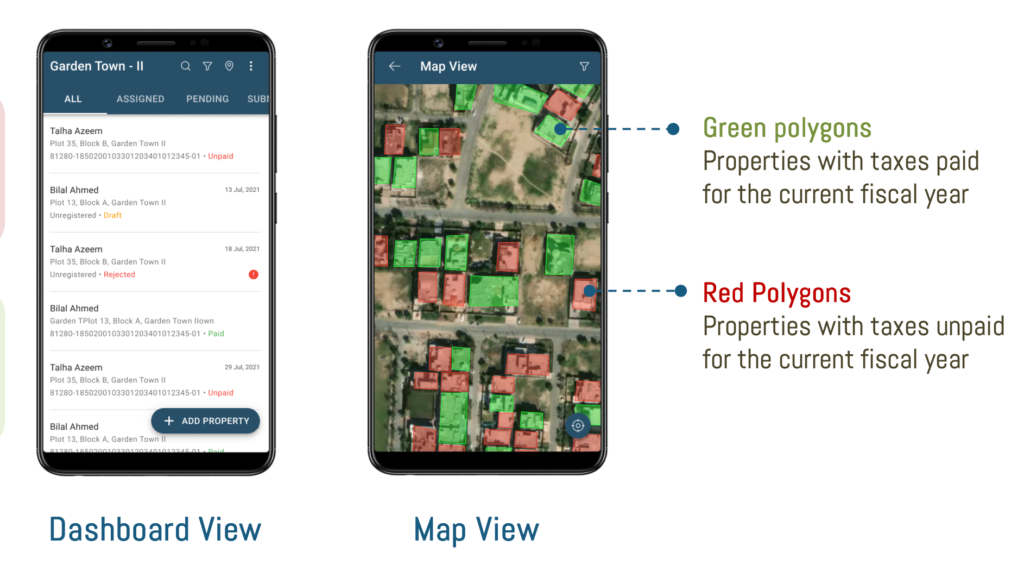
CERP followed a human-centred design process covering discovery, design workshops, prototyping and final development. A full-time CERP liaison worked from within the government department. Senior leadership, mid-level managers and field officers took part in design workshops and feedback sessions. The team built a field inspector app, a management dashboard and a taxpayer mobile app, and piloted them in Faisalabad and Sahiwal. AI-based satellite imagery module that uses machine learning was used to detect properties automatically and identify unregistered ones.
Impact Achieved
The field app made property inspections more efficient, accurate and traceable through geotagged data, photographs and digital property signatures. The dashboard brought structure to field operations and the pilot showed that digital tools can improve tax administration when they come with staff buy-in, hardware handover and dedicated technology budgets.