
Abdullah Ijaz
- Grade 09 | First-year student | TNS, Beaconhouse
- 15 Years Old | Lahore, Pakistan
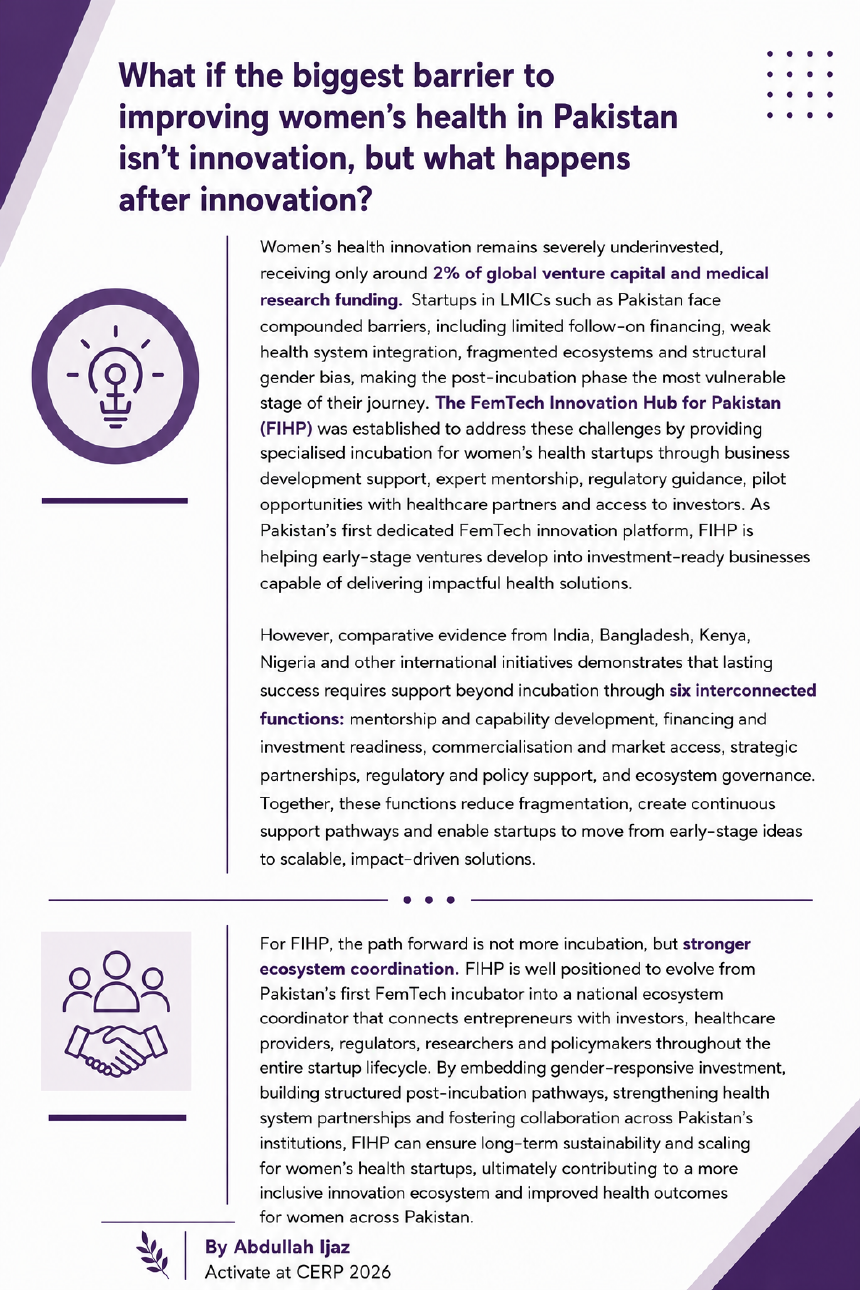
What if the biggest barrier to improving women’s health in Pakistan isn’t innovation, but what happens after innovation?
Amaan Naseer
- Grade 10 | Sophomore-year student | TNS, Beaconhouse
- 15 Years Old | Lahore, Pakistan
How do Private Schools that express Interest in Financing differ in their Operational and Institutional Characteristics?
Education in Pakistan has grown increasingly complex with the rise of low-cost private schools i.e. institutions in rural, low-income areas that operate privately while filling gaps left by public schools. Although many studies examine how financial aid affects these schools, few explore how interest in financial aid (measured by whether a school has previously sought a loan or aid) relates to a school's institutional characteristics.
Analysis of existing literature and data reveals several key findings. First, demand for financial aid remains low, largely because many schools are unaware such support exists. Second, schools interested in financial aid report profits up to 40% lower than schools that aren't interested, yet both groups express only modestly different levels of discomfort with their financial situation, a gap that doesn't align with the stark profit difference. Finally, investment priorities diverge sharply: schools interested in financial aid tend to prioritize capacity-building (more classrooms, larger buildings), while disinterested schools lean toward quality-focused investments. This suggests that financially aid-seeking schools may continue prioritizing expansion over quality in the future, raising concerns about long-term educational outcomes in this sector.
It is incredibly important that low-cost private schools are able to access financial aid readily to ensure students from all socioeconomic backgrounds are able to access quality education. It is also necessary for low-cost private schools to be seen as a separate institutional type rather than being grouped up with other private schools in rural areas.
Amal Rehan
- Grade 11 | Junior-year student | TNS, Beaconhouse
- 17 Years Old | Lahore, Pakistan
Every school in Islamabad's public system got better at teaching over the past year. The gap between the best and worst still didn't budge.
Islamabad's government schools run across six sectors, from dense urban neighbourhoods to rural outskirts. Between two rounds of testing, more than 56,000 children in Grades 2 through 5 sat the same assessments in Mathematics, English, and Urdu, a rare chance to watch a whole system move, not just a snapshot.
The system moved, and it moved everywhere. Scores rose in every subject, every grade, for girls and boys alike, and in all six sectors. But the children in the strongest sectors still finished about a full grade-level of mathematics ahead of those in the weakest the same distance as a year earlier. Rising tides lifted every boat and left the fleet in exactly the same order. Whatever separates a high-performing classroom from a struggling one, it held firm even as everyone improved.
This is the shape of the question worth chasing next: not whether learning is improving, but why some classrooms consistently pull ahead. Closing that gap will take knowing what actually happens inside the rooms where children learn the practices and conditions these scores can point to, but cannot yet name.
Ammar Zeeshan
- Grade 12 | Senior-year student | SICAS, DHA
- 18 Years Old | Lahore, Pakistan
Research Question: What relationships emerge between classroom learning environments and student academic or socio-emotional outcomes?
What if the classrooms Pakistan calls “excellent” are simply the ones that no one has bothered to measure? In one of the country’s largest private school networks, nearly every single classroom is rated as high quality - but is that really the case? Student outcomes have swung dramatically, varying from branch to branch, sometimes exceeding expectations. The unsettling truth uncovered here: a startling share of these results may not reflect teaching at all, where 40% of the lowest-scoring classrooms had been judged on just a single observed lesson, compared to only 17% elsewhere in the network.
Using 195 branches, close to 7,000 lesson observations, and outcome records for over 60,000 students, this study tested whether classroom quality genuinely predicts both academic achievement and students’ deeper socio-emotional growth. The relationship proved far more limited than expected: of sixteen possible links between academic and social-emotional outcomes, only two were statistically meaningful, and Math and Science scores showed no connection at all.
The cost of mistaking thin data for weak teaching shows implementation of misallocated resources, misplaced blame, and interventions aimed at the wrong problem. Before any classroom earns a label, school systems owe it more than a single lesson's worth of evidence. And if the goal is truly well-rounded students, test scores alone won't get there, and this data shows that academic and emotional growth demand separate strategies.
Anna Fatima
- Grade 11 | Junior-year student | Lahore Grammar School, OPF
- 15 Years Old | Lahore, Pakistan
Governments are turning to smartphone cameras to guess how much a house is worth, and in the one place this has been tested under conditions similar to Punjab, the camera lost.
In Punjab, property tax is assessed through manual forms and wide officer discretion, leaving a large and persistent gap between what the province could collect and what it does. Computer vision technology that estimates property value from photographs has been proposed as a fix, and it is already used in tax systems from Canada to Rwanda. This review weighs ten sources to ask whether it would work in Punjab too.
The clearest answer comes from Kananga, a low-capacity city in the Democratic Republic of Congo, the setting closest to Punjab's own. There, a simpler model using existing administrative records predicted property values correctly 60% of the time. The computer-vision model, using photographs alone, got it right only 40% of the time, a gap the researchers traced to small photo samples and inconsistent image quality, not the technology itself.
For Punjab, the lesson is not to avoid computer vision, but to not assume it. A small, carefully benchmarked pilot tested against the data the province already collects should come before any wider rollout.
Daniyal Kazi
- Grade 11 | Junior-year student | Repton School, Dubai
- 16 Years Old | Dubai, United Arab Emirates
Screen a roomful of people for hepatitis C at a health camp in Nankana Sahib and about one in six comes back positive. Run the same camp in Mianwali and it's under 1%.
Pakistan carries the heaviest hepatitis C burden in the world, and the virus travels mostly through unsafe injections. This project at the Centre for Economic Research in Pakistan, run with Punjab's Healthcare Department, worked through the 2023 Integrated Health Weeks. Screening records from door-step camps across 36 districts. What do the camps find, and what slips past them?
Hepatitis C dominates. Roughly 5% of everyone tested was positive, clustered in the central districts, with the north and west staying low. But the camps also picked up something they weren't looking for. One in eight adults had high blood pressure, a fifth were obese, and both climbed with age. These weren't separate people with separate problems, either: about one in sixteen walked out of a single visit carrying two or more conditions.
Which means the right question about a camp isn't how many people came through. It's what got found, and what happened next. Every positive result needs a path to treatment. Start where infection is worst. Handle it that way and a once-a-year screening drive starts doing a second job, showing you where Pakistan’s diseases actually sit.
Eman Hayat
- Grade 11 | Junior-year student | Lahore Grammar School, Defence
- 17 Years Old | Lahore, Pakistan
Every woman deserves for her pregnancy to be supported by timely healthcare, however, despite significant progress in maternal healthcare, many women in Pakistan continue to face barriers that limit access to essential antenatal care (ANC). Financial constraints, mobility challenges, social norms, and the availability of skilled female healthcare providers can prevent women from receiving timely and adequate care, increasing the risk of adverse maternal and neonatal outcomes. Drawing on nationally representative data from the Pakistan Demographic and Health Surveys (2012–13 and 2017–18), it was examined how these barriers are associated with ANC utilization among women with a recent live birth experience. The findings identify key obstacles that influence the number of ANC visits, timely initiation of care, and access to skilled providers. Improving maternal health requires more than increasing the number of health facilities—it requires understanding why women are unable to use them. Addressing these barriers is essential to ensuring healthier pregnancies, safer births, and better outcomes for families, while advancing Pakistan's commitment to equitable and accessible healthcare for all.
Farrin Asim
- Grade 12 | Senior-year student | Lahore Grammar School, Defence
- 17 Years Old | Lahore, Pakistan
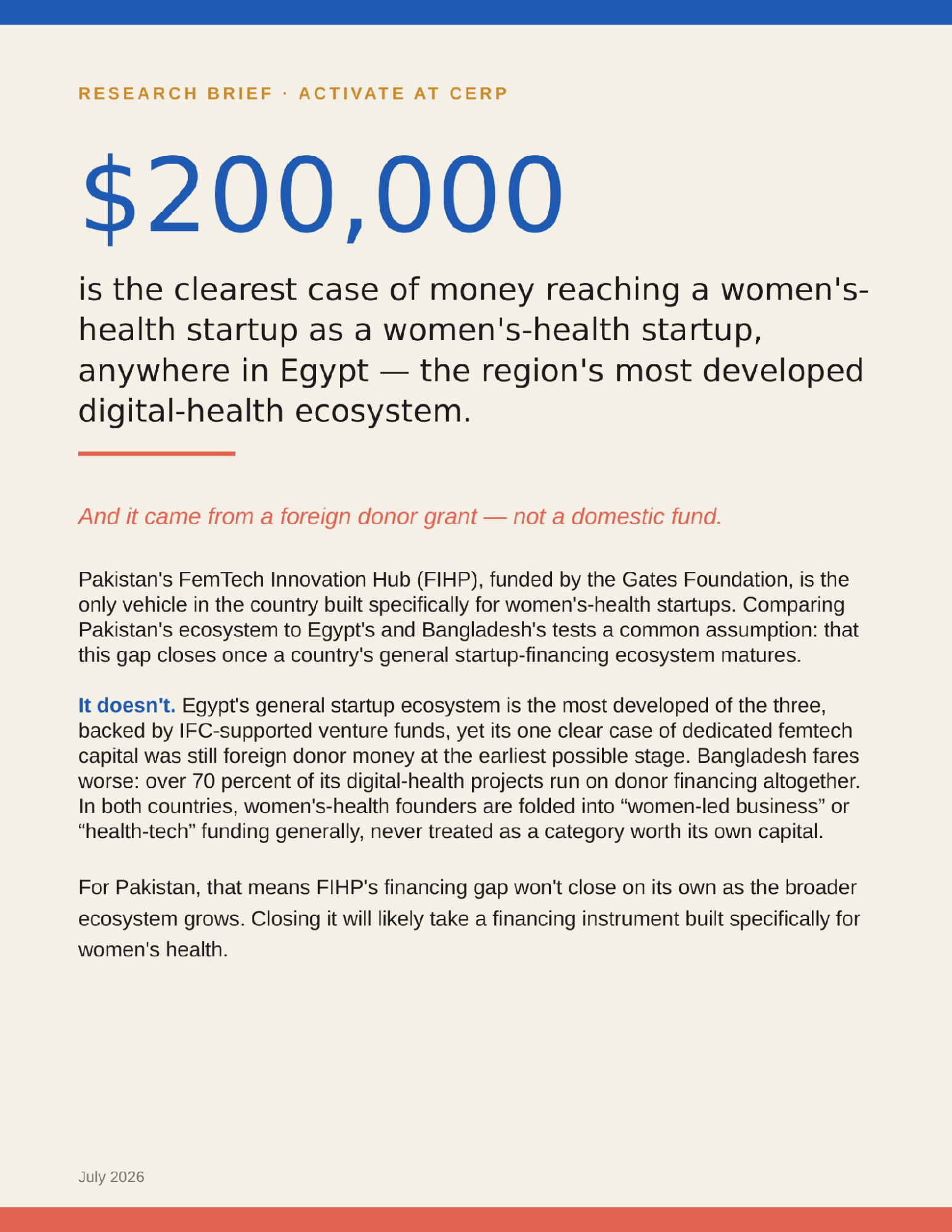
Research Brief – Activate at CERP (July 2026)
The original is a designed image card; shown as provided.
Fatima Faisal
- Grade 11 | Junior-year student | Learning Alliance DHA
- 18 Years Old | Lahore, Pakistan
Confidence, Concealment, and Control: What Self-Injection Contraceptive Really Looks Like for Women in Urban Pakistan A woman self-injects the contraceptive DMPA-SC (brand name Sayana Press).
"There's a little bit of fear... but I can do it."
A woman using DMPA-SC, self-injecting at home (Photo: PATH|Gabe Bienczycki — source: path.org)
That sentence, spoken almost as an aside during an interview, captures something our research kept circling back to.
In Pakistan, a woman dies roughly every 50 minutes from pregnancy-related causes, most of them preventable. Contraception is one of the clearest ways to bring that number down, and yet the barrier here isn't awareness. While 96% of married women can name a modern method, only about a third actually use one (UNFPA, 2024).
Not every MWRA we interviewed arrived at confidence the same way. For some, side-effect anxiety and self-efficacy in administering the injection were tangled together from the start. "Who knows whether I will be able to administer it... or that there might be some side effects," one respondent said — a worry that rarely stood alone. Doctors describe building that confidence deliberately, not leaving it to chance. "I would demonstrate it once or twice, show her on a model, have her practice, make sure she understands," one provider explained.
Husbands, in our interviews, rarely worried about the injection itself. Their questions were about due diligence — is this the real product, is the provider qualified. The price came up last. Decision-making authority wasn't one pattern; some women described fully husband-led decisions, others genuine joint decision-making. Privacy wasn't a passive wish ; it was something actively managed.
Access to DMPA-SC was never really the finish line. For the women in this study, it was the starting point of a quieter negotiation.
Based on in-depth interviews with women, married men, and healthcare providers across Lahore, Karachi, and Peshawar.
Iman Asad
- Grade 10 | Sophomore-year student | Learning Alliance International
- 15 Years Old | Lahore, Pakistan
Whoever's Home, Wins: Inside the Real Rules of Family Planning Decisions
This piece draws on ten in-depth interviews (four married women, four married men, and two doctors) conducted across Lahore and Karachi. The broader research looked at how couples learn about, discuss, and decide on contraception, with a specific focus on DMPA-SC, a self-injectable contraceptive. Unlike traditional injectable birth control, which requires a clinic visit every three months, DMPA-SC can be administered by the patient herself at home after a single training session with a provider. It's meant to cut down on travel, cost, and repeated clinic visits.
The full research also looked at awareness, misinformation, and where people go for health information. This blurb sets that part aside and just focuses on one theme: who actually holds decision-making power inside the household, and how uneven that turns out to be from one home to the next.
There isn't really a fixed rule for who decides whether a couple uses contraception. It seems to come down to whoever happens to be around.
One man described his household as a partnership: "my wife and I decide ourselves, after our discussion." Then he added that he makes the final call anyway. So it's joint in name, but not really in practice.
A few Karachi women described it more simply than that. Their husband decides. There isn't much of a discussion to point to.
Then there's a different kind of household, where the husband is rarely home, so his wife ends up managing most of the health decisions, the timing, the logistics, by default. Not because of any particular philosophy, just because someone has to and he isn't around.
Looking at these households together, a rough pattern emerges: decision-making power tends to follow presence more than any fixed cultural script. Whoever's actually around day to day usually ends up with more say, even if that's not how anyone would describe the "rule" on paper.
Money is a bit of an exception, though. Across almost every household, no matter who was leading the health conversation, the money stayed with the husband. Income runs through him, so spending mostly does too.
There are also cases where none of this flexibility applies at all. One doctor described a husband whose religious beliefs meant family planning was never really an option, regardless of the circumstances. His wife was already on her sixth or seventh pregnancy and wanted to stop, but that didn't change anything. The decision wasn't really hers to make.
As one doctor summed it up, a husband's role can be "a great enabler or a significant barrier." Which one he ends up being seems to depend less on the couple's specific situation and more on who he is as a person. Two women in similar circumstances can end up with very different levels of control over their own health, depending largely on that.
Based on in-depth interviews with ten respondents (four married women, four married men, two doctors) across Lahore and Karachi.
Khadija Usman Gilani
- Grade: Grade 12 | Senior-year student | The Lahore Alma
- 17 Years Old | Lahore, Pakistan
Pakistan LHWP: M&E Diagnostic & Reform
A STRATEGIC SYNTHESIS OF MONITORING & EVALUATION CHALLENGES IN PAKISTAN'S 90,000 LADY HEALTH WORKER PROGRAMME AND GLOBAL BEST PRACTICES FOR REFORM.
Current M&E Bottlenecks
Declining Coverage Targets, halted recruitment and lack of training: Population coverage dropped across Punjab, Balochistan, and AJK, with no province except Sindh meeting operational target thresholds.
Weak Supervision Loops: A 125 supervisor ratio suffers from severe transit funding gaps and a lack of post-visit actionable evaluation metrics.
Manual Paper MIS Lag: Heavy reliance on physical paper reporting causes data lags up to months, preventing proactive audit and risk response.
Global Reform Roadmap
Automated Digital MIS (India ASHA Model): Adopt tablet-based performance tracking ASHASoft) for instant data entry, automated validation, and self paced mobile assisted learning and training.
Dedicated Mentorship (Brazil CHA Model): Establish nurse supervisors spending 50%+ time on structured field visits for supportive, clinical problem-solving.
AI|ML Data Auditing & Ringfenced Funds: Deploy machine learning models for anomaly detection while guaranteeing operational transit funding for supervisors.
Leyla Mirza
- Grade 10 | Sophomore-year student | TNS Beaconhouse
- 16 Years Old | Lahore, Pakistan
Who Receives Antenatal Care? The Role of Age, Parity, and Media Exposure in Pakistan
Only 1 in 3 Pakistani women receive adequate antenatal care (ANC).
From the 15,701 women aged 15 to 49 with ANC records in the Pakistan Demographic and Health Surveys (PDHS) of 2012|13 and 2017|18, a woman’s age, the number of children she has, and her access to media can dramatically shape her chances of having a healthy pregnancy.
Adequate ANC peaks for women in their mid 20s and early 30s, dropping sharply for teen mothers and women over 35. For every extra child a woman has already had, her odds of getting proper care fall further. Women with 6 or more children are less than half as likely to receive adequate ANC as compared to first time mothers.
Media exposure can help close some of these gaps because women with high exposure to TV, radio, and newspapers are over four times more likely to get adequate care than those with none. However, the problem is that it doesn't help everyone equally. For women who've already had many children, even heavy media exposure hardly moves the needle. That means health messaging campaigns Pakistan relies on most are reaching and helping the women who need it the least, while the highest-risk mothers are left behind.
Closing this gap will take more than awareness campaigns. It will take targeted care that reaches women where they already are in their lives.
Maida Mirza
- Grade 11 | Junior-year student | TNS Beaconhouse DHA
- 17 Years Old | Lahore, Pakistan
Employment Does Not Equally Improve Maternal Healthcare in Pakistan: The Case for Targeted Support for Rural and Agricultural Women
A woman working in Pakistan's agricultural sector is roughly five times less likely to get adequate prenatal care than a woman in a professional office job. Not because she isn't trying, but because of the kind of work she is involved in.
Across 15,701 women with antenatal care (ANC) records in the Pakistan Demographic and Health Surveys of 2012-13 and 2017-18, employed women overall completed fewer ANC visits than non-working women. However, this obscures a huge divide. 77% of women in professional, technical, or managerial jobs completed the recommended four or more visits, which is a higher share than non-working women. Women in agriculture did far worse, with only 14.2% of employees having four or more visits, and most didn't deliver their babies in a hospital or clinic.
The gap in ANC utilization between employed and non-working women barely shows up in urban areas. However, it is substantial in rural areas, where employed women complete fewer ANC visits than unemployed women.
There is a common assumption that employment leads to better access to maternal health. However, this study complicates that, showing that not all jobs give women equal access to maternal healthcare. Pakistan's maternal health programmes may need to look beyond employment status, and focus more on the types of employment and setting that leaves certain women furthest behind.
Mashal Ali Khwaja
- Grade 10 | Sophomore-year student | Queen's Gate School, London
- 15 Years Old | Karachi, Pakistan
An exploratory study of the 2012|13 and 2017|18 Pakistan demographic and health surveys found that almost 7|10 married women in Pakistan don’t use modern contraceptives. The use of contraceptives depends on many factors, including access to healthcare facilities, price and if the woman has the ability to make her own household decisions. It was revealed that women with the highest autonomy level reported the highest levels of contraceptive use. Whilst 31% used modern contraceptives only 19% of women with the lowest autonomy used it. Women with high autonomy also had a lower unmet need for family planning. This suggests that they were more able to make decisions which suited their reproductive health preferences instead of not being able to access what they wanted. Education was also a factor which was associated with autonomy levels. Women with higher education were much more likely to have higher autonomy than women with no education. However, education alone doesn’t explain autonomy levels, many women with no education still had high autonomy and vice versa. Therefore, with all these findings being taken into account they suggest that in order to improve usage of modern contraceptives it is necessary to address household decision making.
Momina Aaqil
- Grade: Grade 11 | Junior-year student | Lahore Grammar School International
- 16 Years Old | Lahore, Pakistan
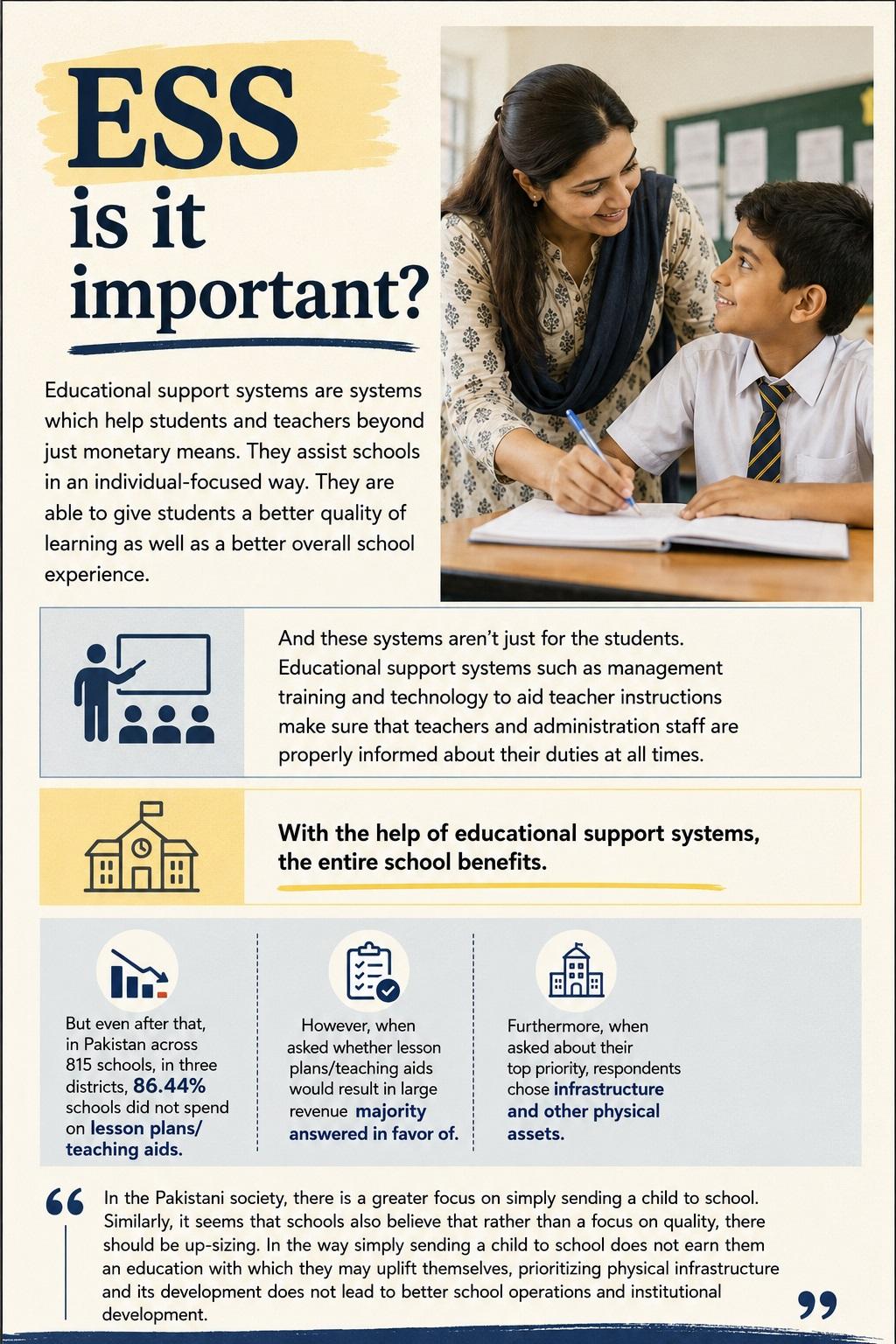
Educational Support Systems: Are they important?
Muhammad Abdullah Farid
- Grade: Grade 12 | Senior-year student | The Langlands School and College
- 19 Years Old | Goldur, Chitral, Pakistan
Lady Health Workers often know the breastfeeding guidance that can improve newborn health, yet these crucial topics are not always discussed with mothers and families before birth.
Breastfeeding is one important part of newborn health and nourishment. In Punjab, only 20% of mothers begin breastfeeding within the first hour, and only 35% continue breastfeeding until the child is two Years Old. The Infant Feeding mobile health app was developed to support Lady Health Workers with patient tracking, check-up schedules, and counselling resources. These resources already include useful guidance, but they can still be difficult to find quickly during a household visit.
My project focuses on this practical gap. When a mother or family asks a direct question, the answer may already exist inside the app, but the Lady Health Worker may have to search through longer sections to find it. To respond to this, I propose Rahnuma, a built-in AI helper inside the existing Infant Feeding app.
Rahnuma would let Lady Health Workers ask questions in Urdu, Roman Urdu, English, text, or voice. Instead of acting like a general chatbot, it would retrieve answers only from approved infant-feeding resources added to its knowledge base.
The goal is not to replace Lady Health Workers. It is to help them use trusted guidance faster and more safely during household visits.
Muhammad Ahmed Mehar
- Grade 11 | Junior-year student | Sheikh Zayed International Academy
- 17 Years Old | Islamabad, Pakistan
Where a Mother Lives Still Decides the Care She Gets
Five years can change a lot. Between 2012-13 and 2017-18, the share of Pakistani women receiving care during pregnancy jumped from about 76% to 88%, one of the clearest signs of progress in the country's maternal health record.
But that national number hides a hard truth: progress has not reached everyone. Analysing survey data from more than 28,000 women across two national surveys, this project found that in Balochistan, nearly half of women received no care at all during their last pregnancy, while in Islamabad, 96% did. Rural women trail urban women by 16 percentage points.
Care during pregnancy is where dangerous complications are caught early and mothers are connected to safe delivery. When access depends heavily on geography, the women facing the hardest conditions are also the least likely to be seen by a health worker before giving birth.
The encouraging part is the speed of the national improvement: coverage can move, and quickly. The challenge now is making sure it moves everywhere. The project also found that women with regular access to television, radio or newspapers were far more likely to receive care than those without, a reminder that information, not just distance, shapes who gets seen.
Muhammad Ashmaan Aslam
- Grade 11 | Junior-year student | Fazaia Degree College & School
- 17 Years Old | Karachi, Pakistan
Maternal Healthcare in Pakistan: Does Women's Education Matter?
In Pakistan, pregnant women without formal schooling face significantly lower odds of receiving recommended antenatal checkups. Barely a quarter of non-educated mothers receiving initial care complete at least four visits, whereas nearly three-quarters of mothers with secondary schooling or higher achieve this benchmark.
Drawing on nationally representative records for 15,701 married women from the 2012–13 and 2017–18 Pakistan Demographic and Health Surveys who accessed at least one consultation, this study examines how educational background influences timely initiation, sustained attendance, and institutional delivery choices.
The findings indicate that schooling shapes every step of maternal care. Uneducated women begin care later in pregnancy, drop out far more frequently, and report higher rates of home births over clinical settings. While economic standing demonstrates a parallel disparity—with mothers from impoverished households completing required consultations at drastically lower rates regardless of educational background—female decision-making agency shows a comparatively limited association.
Although these correlations do not demonstrate direct causality, they underscore that public health initiatives must target financial and geographic accessibility alongside educational awareness to meaningfully close the gap in maternal healthcare utilization.
Muhammad Faizan Ali
- Grade 12 | Senior-year student | Lahore Grammar School Defence
- 17 Years Old | Lahore, Pakistan
Media Helps, but It Does Not Close Pakistan’s Contraceptive Gap
Contraceptive use in Pakistan is going in the wrong direction. Overall contraceptive use in Pakistan did not improve between the 2012|13 and 2017|18 survey rounds, and fell from 34.3% to 31.5%. This included a fall in modern contraceptive use, from 26.1% in 2012|13 to 23.0% in 2017|18. Traditional methods changed very little, rising from 8.2% to 8.6%. This suggests that progress in access to reliable methods may have weakened rather than improved.
Respondents with less education, lower wealth, and living in a rural residence consistently reported lower contraceptive use. Yet, media still appeared to matter. Respondents with these exact conditions who encountered family-planning messages through television, radio, or newspapers generally reported more contraceptive use than those who received no such messages. However, it did not bring them fully level with wealthier and more educated groups.
This does not prove that exposure to family planning messaging on media causes contraceptive use. It does show that having access to information can help people make better decisions. However, there are still many obstacles that prevent people from acting on that information, such as poverty, living far away from clinics, and not having equal access to services. Pakistan’s family-planning programmes should therefore connect targeted communication directly to clinics, trusted health workers, method choice, and follow-up care.
Information can open the door, but accessible services determine who can walk through it.
Muhammad Musa Mansoor
- Grade 12 | Senior-year student | Aitchison College, Lahore
- 17 Years Old | Lahore, Pakistan
Voices for Change: Collective Action through Parental Engagement In Pakistan’s Education System
When a school has no clean drinking water or a teacher who never shows up, who is actually responsible for fixing it, and does anyone answer when you ask? Across 435 villages in Bahawalpur and Bahawalnagar, researchers put that question to the test, organizing parents into structured community meetings and pointing some toward their District Education Officer and others toward their elected political representative, to see which route is more successful at changing individual and schooling outcomes. Some groups were left to build their case and deliver it on their own; others had an NGO partner walk alongside them the whole way. The early results tell a more layered story than citizens demanding change. Nearly every group, regardless of who they were asking or how much support they had, managed to agree on what was broken, clean water, poor quality of education and crumbling buildings topped the list. But turning that agreement into an actual message ready to hand to an official proved to be where things splintered: gender specific groups sailed through it, others stalled almost entirely. And even when a message stalled, most parents didn't quietly give up, most said they'd still deliver it, just later than planned. For a country where citizens are already sharper judges of their local schools than officials often assume, this project asks a more practical question: which door, bureaucrat or politician, facilitated or not actually opens and how it impacts how citizens perceive future engagement with policy actors.
Muhammad Umer Usman
- Grade 11 | Junior-year student | Karachi Grammar School
- 17 Years Old | Karachi, Pakistan
Yousaf Saleem, the first blind judge in Pakistani legal history. Receiving a gold medal for obtaining top marks in his law exams, Yousaf took the oath to be sworn in as a judge in 2018. He serves as an inspiration to the impaired youth in Pakistan, showing them that their abilities know no bounds. Yet, children with disabilities do not receive as much support as compared to others. The literacy rate amongst children with disabilities is 20% lower than that of their peers. It is not only their education that is limited, but also other aspects of their lives. For instance, children with disabilities are more likely to face restricted access to healthcare, sanitation, and safety.
To counter these problems, it is necessary to spread awareness on the prevalence and severity of disabilities - allowing equitable action to be taken. The Human Rights Watch suggests there are between 3.3 - 27 million people with disabilities in Pakistan. The wide range makes it difficult to pinpoint the exact number, so the Inclusive Education Strategy was implemented by the government in Punjab, to survey children in special needs schools about their impairments. The survey suggests that 12% of children have some sort of visual impairment, 53% have a hearing impairment and 7% have a physical impairment.
Although the study helps understand the predominance of impairments, it is not enough. A broader program needs to be implemented in all of Pakistan to truly grasp the situation. By understanding the full picture, policies to support and help special needs children can be put into action, providing them with equal opportunities as those without disabilities.
Nataliya Shazadi Chaudry
- Grade 10 | Sophomore-year student | Learning Alliance
- 15 Years Old | Lahore, Pakistan
Can low-cost private schools address Pakistan’s education quality issues?
Low-cost private schools that charge slightly higher fees are often associated with better school quality. But does paying more always mean students actually learn more? How is this learning measured?
Low-cost private schools are an essential part of Punjab's under-resourced regions where access to quality education is scarce. While research tends to compare public and private schools, learning trends within the low-cost private school sector remain to be explored in detail. This research examined average learning scores in English, Mathematics, and Urdu using standardized assessments to understand why learning within the low-cost private school sector itself differs.
In our study, we compare low-cost private schools charging fees at or below the sample median fee of Rs. 201.25 (Category 1) with schools charging fees above this amount (Category 2 - with a maximum fee of Rs. 1,750). Students in Category 2 schools consistently outperformed those in Category 1 across all three subjects. The largest learning gap was observed in English (0.357 standard deviations), followed by Urdu (0.303 standard deviations) and Mathematics (0.251 standard deviations). Across the sample, English was the strongest-performing subject, while Urdu recorded the lowest average achievement.
Our correlational analysis suggests that, although slightly higher-fee schools recorded better average learning outcomes, school characteristics like enrolment, facilities, and number of teachers need to be looked at as well. Standardised learning assessments can help in identifying schools that need support than relying on enrolment alone to measure school quality.
Saifan Qasim
- Grade 10 | Sophomore-year student | TNS Beaconhouse
- 15 Years Old | Lahore, Pakistan
Digital Blurb – SOPRAN Project
56% of adolescent girls in Pakistan suffer from microcytic anaemia. However, the majority of these girls are unaware of what anaemia even means, leaving conditions undiagnosed, unrecognised, and untreated. As a result, young girls have to tackle fatigue, shortness of breath, and cognitive impairment every day, with some even fainting in classes. After analysing baseline and endline survey data from the SOPRAN intervention in 2025, the results point to a common trend: dietary quality – a major factor in determining nutritional outcomes – is overlooked as adolescents gravitate towards foods with appealing sensory attributes. In fact, 35% of girls dislike the taste of healthy food products, exacerbating social aversion to fruits and vegetables. Conversely, the consumption rates of ultra-processed snacks and fast foods within public school canteens have skyrocketed to 88% and 42%, respectively. This increase owes to girls preferring the cheap and convenient dopamine rushes given by salty and|or sweet snacks. Nevertheless, after girls were empowered with essential nutritional knowledge through education sessions, survey results showed a significant improvement in consumption rates across the 9 core food groups, averaging an 11-point increase each. Furthermore, the dietary diversity score, a tool used to measure how many of the 9 food groups an individual consumed over the last 24 hours, increased by approximately 1 point across all districts. This suggests that nutritional education can play a role in superseding the bias against healthy foods, showing how educational empowerment is not just a secondary objective but a national responsibility to secure the dietary outcomes of Pakistan’s adolescent girl population.
Samir Naqvi
- Grade 9 | First-year student | Collegiate School
- 14 Years Old | New York, New York, United States of America
More schools in a village should mean better education. In rural Punjab, that's not what happens.
In Faisalabad district, some villages have just one school. Others have as many as nine, all competing for the same students. At first, it looks like villages with more schools also have higher test scores. But once you factor in what a school actually spends on teachers and buildings, the number of competing schools stops mattering at all.
What really matters is teacher pay. Schools that pay their teachers more tend to have students with higher test scores, likely because higher pay helps schools hire and keep more qualified, experienced teachers. This holds even after considering the school's building quality and how long it's been open.
Meanwhile, some older schools keep a steady number of students year after year, even though their test scores stay low. These schools survive by staying full, not by teaching well, suggesting that many rural schools are judged on enrollment rather than whether children are actually learning.
One open question: does more competition push schools to pay teachers better in the first place? This research can't yet confirm that correlation. The clearer lesson is this: don't just count how many schools are nearby. What matters is what happens inside them, especially how much teachers get paid.
Shubam Kumar
- Grade 10 | Sophomore-year student | Private Candidate
- 17 Years Old | Islamkot, Pakistan
Civil Service Preferences Project
Giving civil servants the choice over their next job posting based on merit increases tax revenue growth by up to 41 percent, without spending a single extra rupee.
Public administration in Pakistan is heavily constrained by short political tenures and expensive physical perquisites. Senior administrative officers change posts every 16 months on average, while compensation relies on un-costed perks, like government housing sitting on prime urban land worth Rs 1.45 trillion in Islamabad, rather than performance-linked pay.
Analyzing personnel records, survey evaluations, and field experiments across tax offices in Punjab shows that when job locations are awarded based on performance rankings, annual tax revenue growth surges by 30 to 41 percent. Furthermore, when senior bosses receive administrative discretion, they fast-track top-performing junior officers to higher positions 12 to 20 percent more frequently than lower performers.
Postings do not have to function as political favors or arbitrary punishments. By protecting post tenures and tying location choices to verified performance, governments can dramatically improve state capacity and public service delivery at zero financial cost.
Soha Karim
- Grade 12 | Senior-year student | Aga Khan Higher Secondary School
- 18 Years Old | Zulfiqarabad, Gilgit
Teacher compensation has long been recognized as an important factor in attracting, motivating, and retaining qualified educators. However, different compensation structures such as fixed salary schedules, performance-based pay, bonuses, and incentive programs may influence teachers in different ways. This research explores how these compensation models relate to observable classroom practices and teacher behavior, including instructional quality, classroom management, student engagement, and professional commitment.
Rather than assuming that higher pay automatically leads to better teaching, this study examines whether the way teachers are compensated influences how they plan lessons, interact with students, implement instructional strategies, and participate in professional development. It also considers the broader factors that shape teacher performance, such as school culture, administrative support, workload, and available resources.
Higher salaries alone do not always lead to better teaching or student outcomes. Although private school teachers earn less than public school teachers, they attend school more regularly and spend more time teaching which may contribute to the better performance of private school students. Factors such as teacher attendance, accountability, and classroom engagement also play an important role in improving education than salary alone.
Sulaiman Azam
- Grade 12 | Senior-year student | Aitchison College, Lahore
- 17 Years Old | Lahore, Pakistan
How do you run a successful school when your students' parents can barely afford the fees?
In many poor areas of Pakistan, low-cost private schools are stepping up to provide education where public schools struggle. But how do the people running these schools actually make them work? This project looks at the everyday challenges and smart business choices of these school owners.
To keep fees affordable, owners often hire local women who need jobs close to home and accept lower pay. Since budgets are tight, owners have to be very hands-on—like taking "corridor walks" to prevent theft and check that good teaching is happening. They also have to choose how to manage their teachers, deciding whether to make decisions completely alone to save time, or ask their staff for input to keep them motivated.
Money is a major hurdle. Owners have to get creative to keep their schools open, often using their own personal savings, securing government grants, or making fees easier for poor parents to pay. The study also compares school types, finding that independent schools often get better student grades than franchise chains because the owners work harder to build their own brand.
Overall, this research highlights the real-world hustle of these school owners. It shows how they use smart, community-focused ideas to give kids a better chance at learning, even with very little money.
Syed Mueez Mohiuddin
- Grade 12 | Senior-year student | Aitchison College
- 16 Years Old | Lahore, Pakistan
Nearly half of Pakistan's married women watch television every week. Ask how many recall seeing a family-planning message there, and the figure falls to one in five. That gap matters in a country where two thirds of married women use no contraception. For my capstone project at the CERP, this research analysed two rounds of national health survey data (28,626 surveyed women aged 15–49, surveyed in 2012–13 and 2017–18) to ask what family-planning communication is achieving, and for whom.
The pattern is consistent. Television reaches far more women than any other channel, with recall through newspapers and radio sitting below 5%, yet access alone doesn't make a message stick. The women on the receiving end are not one audience. Contraceptive use rises with age and with the number of children a woman has, peaking in her late thirties. Families are also getting smaller: the share of women with six or more children fell from 24% to under 19% between the two surveys, while one-to-three-child families grew to nearly half the total.
The implication is straightforward. Family-planning campaigns should be judged on whether women remember and understand their messages, not on how many households the broadcast reached. A message written for everyone lands with no one — a newlywed deciding when to start a family needs to hear something different from a mother of five who wants to stop.
Yusuf Mubashir Hassan Qureshi
- Grade 12 | Senior-year student | Karachi Grammar School
- 17 Years Old | Karachi, Pakistan
Despite 99% of women knowing at least one family planning method, only 25% use a modern contraceptive. While previous studies have shed light on the impact of socio-economic and demographic factors on use of modern contraception, they tend to neglect the individual impact of media exposure. Using nationally representative data from the Pakistan Demographic and Health Surveys (PDHS) 2012–13 and 2017–18, this study aims to fill that gap by examining the relationship between media exposure and modern contraceptive use among married women in Pakistan. After controlling for age, education, wealth, employment, residence, region and parity, each additional source of family planning media exposure increased the odds of modern contraceptive use by 16.9%. However, family planning messages reached only a small proportion of women. Nearly 75.8% women reported no exposure to family planning messages, leaving only 24.2% exposed through one or more media sources. The results indicate that improving the geographical reach of family planning communication may be more beneficial than relying on existing communication channels alone. Thus, family planning policies should shift towards reducing inequalities in access to reproductive health information by prioritising populations that remain systematically underserved. Ensuring that women from poorer households and lower educational backgrounds receive timely and reliable family planning information may help narrow existing disparities in modern contraceptive use.
Zaki Murtaza Ilias
- Grade 11 | Junior-year student | Walt Whitman High School
- 17 Years Old | Bethesda, Maryland, United States of America
Improving Nutrition Knowledge Among Adolescent Girls in Pakistan
Can school-based nutrition education empower adolescent girls to make healthier decisions for themselves and their families? As part of the SOPRAN (Leveraging Pakistan's Social Protection Programmes for Adolescent Girls' Nutrition) project, this research explored changes in nutrition knowledge among 1,120 adolescent girls aged 10–19 years across seven districts in Pakistan. Using baseline and endline survey data, the analysis examined knowledge related to balanced diets, dietary diversity, anemia, iron absorption, fortified flour, and Weekly Iron and Folic Acid (WIFA) supplementation.
The findings showed improvements across all eight nutrition knowledge indicators between baseline and endline, with the greatest gains observed in knowledge of WIFA supplementation and anemia. These results suggest that school-based nutrition education, combined with broader community interventions, can strengthen girls' understanding of essential nutrition concepts and equip them with information that supports healthier decision-making.
Existing literature further highlights that adolescent girls most often discuss nutrition with their mothers, who play a central role in household food preparation and health-related decisions. By increasing girls' nutrition knowledge, programmes such as SOPRAN have the potential to extend learning beyond the classroom, encouraging conversations within families and reinforcing healthier dietary practices at the household level.
While this descriptive analysis does not establish causal relationships, it provides encouraging evidence that strengthening nutrition education for adolescent girls is a promising strategy for improving nutrition awareness and supporting long-term health outcomes in Pakistan.