
Principal Investigator:
PxD’s advisory has been put together with leading agronomists and climate change experts that provide key recommendations that enable farmers to better adapt their practices to climate change, as well as help farmers mitigate the potential adverse impacts of climate change on the quality and quantity of their yields.
PxD’s systems are designed to scale the delivery of customised digital information to individuals and households so that they act on it to improve their well-being and reduce exposure to risks and disasters such as floods and droughts. Their systems are designed to be scaled; as they scale, average costs fall and they improve the cost-effectiveness of their delivery.
Climate-smart advisory, adaptation, and mitigation efforts are already embedded into their programs across all the districts of Punjab in Pakistan, as well as into the day-to-day agricultural activities that PxD farmers carry out. They focus both on climate change adaptation (reducing potential damage) and climate change mitigation (tackling the causes), as the activities and approaches are distinct.
In Punjab, PxD sends out advisory via robocalls and SMS to over 1.3 million farmers. This advisory covers all major cash crop and several types of livestock in Punjab.
Research Question
- How climate-vulnerable are the farmers that use PxD’s services?
- What are the consequences of climate change that are affecting smallholder farmers’ lives?
- How can we reduce the welfare loss that individual farmers and communities experience, or likely to experience, because of climate change?
Examples of PxD’s work:
- Some agricultural practices are likely to contribute both to poverty alleviation and climate mitigation if they result in increases in agricultural outputs or income. One such example is promoting optimal and timely application of nitrogen-based fertilizers. PxD’s advisory services in Punjab include recommendations on the optimal application of planting and/or top-down fertilizers. Precise application of nitrogen fertilizers has the potential to cut down farming costs if farmers need to purchase less fertilizer, hence improving smallholders’ agricultural income whilst curbing nitrous oxide emissions.
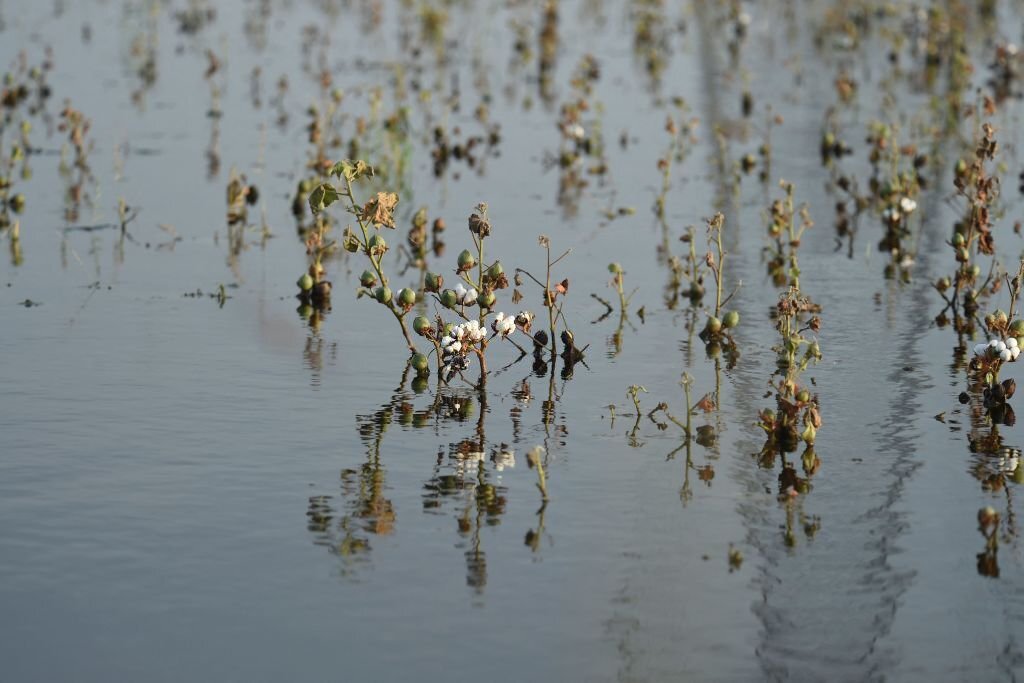
- During the summer 2022 flooding in Pakistan, flood warning related advisory sent by PxD enabled some farmers to harvest their crops before the flooding, hence ensuring that they were able to salvage some of their produce.
- In the recent cotton season, the PxD Advisory recommended the use of yellow sticky cards to farmers to improve their ability to trap and reduce pests. This was also important since lowering the use of synthetic pesticides helps with climate outcomes, improves soil health, and prevents leaching of harmful chemicals and related issues. This led to a sizable reduction in the usage of pesticides and significant cost reductions for farmers.
- PxD’s recommendations related to livestock include compost management and addition of green fodder to improve feed efficiency.
Publications
- Precision Development: Showcasing Our Collaboration with IFAD
- Precision Development: Scaling zinc wheat in Pakistan
- Precision Development: Livestock Management Advisory for Females in Rural Punjab (LMAFRP)
- Precision Development: Provincial Government of Punjab, Pakistan – Agriculture Department (AD) Advisory Service
Tags
Climate Change, Nutrition, Food Insecurity, Agriculture